


By Dental Care Acworth | Dentist in Acworth, GA
You finish whitening, love the shade, and then a sip of cold water hits like a tiny lightning bolt. If this sounds familiar, you’re not alone. Sensitivity is one of the most common side effects of whitening, and it almost always passes. Here’s why it happens, how long it lasts, and what to do about it.
Why Are Teeth Sensitive After Whitening?
Whitening products use peroxide from hydrogen or carbamide peroxide, respectively, to dissolve stains. To do this the peroxide needs to get past your enamel, those who are hard outer layers, to the dentin underneath. Dentin contains tiny channels that extend toward the tooth’s nerve.
While you whiten, your teeth also lose a little water and a few minerals. That leaves those channels more open than usual, so cold air, an iced drink, or something sweet reaches the nerve faster. That’s the sting.
A few things make it stronger:
- A higher-strength whitening gel
- Wearing the product longer or more often than the label says
- Strips or trays that sit on your gums
- Sensitive teeth before you start
- Thin enamel, receding gums, or brushing too hard
- Untreated cavities or cracks
How Long Does Tooth Sensitivity Last After Whitening?
For most people, sensitivity fades within a few days, though it can sometimes last up to a week. After a vigorous in-office treatment, it can last up to two weeks, or if your enamel is poor.
With strips, the sting typically goes away in the first day or two of use and calms down shortly after finishing the package.
If you are over two weeks, pain is growing worse, or the pain is severe, prevent whitening and notify your dentist. Persistent sensation could be a cavity, a broken tooth, and gum recession.
What to Do After Teeth Whitening
The first 48 hours matter most. Here’s a simple routine:
- Keep drinks gentle. Room-temperature water is best. A straw keeps cold liquid off your teeth.
- Skip acidic and staining foods. Soda, citrus, wine, coffee, and tomato sauce can irritate open teeth, and they stain easily right now.
- Brush softly. Give your teeth a little time after whitening, then use a soft brush and fluoride toothpaste.
- Switch to sensitivity toothpaste. Use it twice a day, as directed.
- Pause the whitening. Don’t add another round until your teeth feel normal.
- Take the edge off. Over-the-counter ibuprofen can help. Follow the label, and check with your doctor or dentist if you’re not sure it’s right for you.
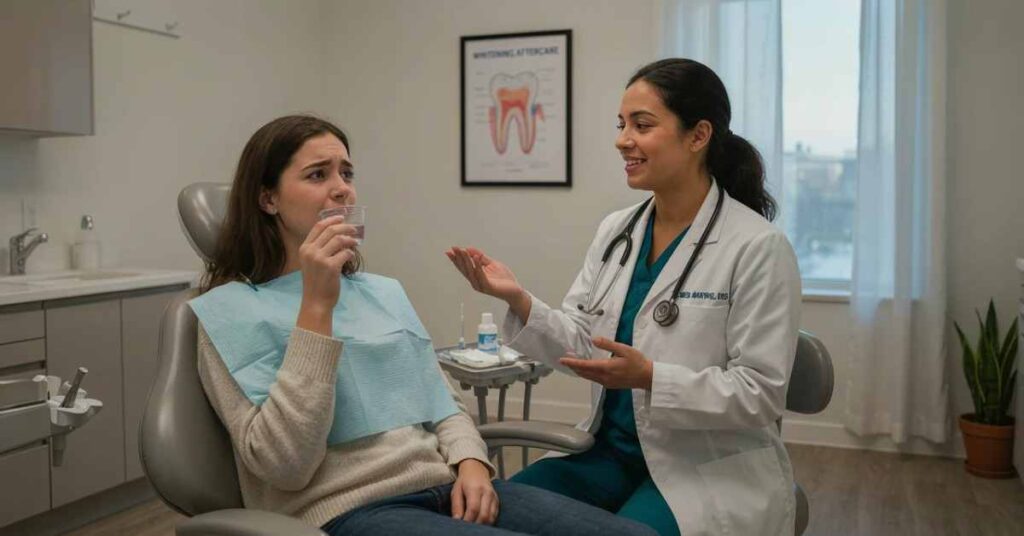
How to Help Teeth Sensitivity After Whitening Strips
Strips are the number one reason we hear about whitening pain. They’re easy to overdo, and the edges often touch the gums. If your teeth zing after strips, try this:
- Stick to the time on the box. Leaving them on longer won’t whiten faster. It just hurts more.
- Trim the strip. If an edge sits on your gums, cut it so it only covers your teeth.
- Take a day off. If your teeth are sore, skip a day between uses.
- Don’t double up. Two sessions in one day is a common mistake.
- Watch your gums. If they burn or turn white, stop and rinse.
When the sting settles, you can start again with shorter sessions.
How to Prevent Tooth Sensitivity After Whitening
Prevention is easier than relief. Here’s what helps:
- Get a checkup first. Even a small cavity, cracked tooth, or exposed root can cause significant discomfort during whitening. It’s better to find those before you start.
- Start sensitivity toothpaste early. Start using it a few weeks before your whitening treatment.
- Choose a gentler plan. Lower strength and shorter sessions usually feel better than one long, strong treatment.
- Keep gel off your gums. Custom trays from a dentist fit your teeth, so the gel stays where it belongs.
- Give your teeth a rest. Don’t whiten again and again to chase faster results.
One more thing to know: whitening only changes natural teeth. It won’t whiten fillings, crowns, veneers, or implants. If you have any of those, ask your dentist what result to expect.
How to Fix Tooth Sensitivity After Whitening
Mild sensitivity usually settles with the steps above. For extra help:
- Use fluoride or remineralizing toothpaste. It helps your enamel recover.
- Leave toothpaste on the sore spot. Some people dab a little sensitive toothpaste there and don’t rinse right away.
- Ask for a desensitizing treatment. Your dentist can apply fluoride or a desensitizing gel in a short visit.
- Stop whitening until you feel normal. Pushing through the pain only drags it out.
Choosing a Dentist in Acworth, GA
Ignore star ratings if you’re looking for the top dentist in Acworth, GA. Look for a firm that listens, examines your teeth prior suggesting cosmetic procedures and explains your options in simple terms.
The right type of dentist depends on what you need:
- Family dentist in Acworth: checkups, cleanings, and preventive care for every age.
- Cosmetic dentist in Acworth: whitening plans and realistic results for your teeth.
- Emergency or same-day dentist in Acworth: severe pain, facial swelling, or a damaged tooth. Don’t assume whitening caused it.
- Dentist for tooth pain: pain that lingers deserves an exam for cavities, cracks, or infection.
Dental Care Acworth provides family, cosmetic, restorative, pediatric, and emergency dental care in Acworth, GA. Whether you’re thinking about whitening or dealing with sensitivity afterward, our team can look at your teeth and help you plan the next step.
Conclusion
Peroxide opens up little channels in your teeth for a short time, so they feel sensitive after whitening. It’s frequent and they usually disappear in a few days. Give your teeth a rest, be gentle on your meals and drinks, use a sensitive toothbrush and wait to do additional whitening till you feel okay. Next time get a checkup first and pick a milder plan. And if suffering is intense or won’t stop, don’t wait. A single brief trip to the dentist, and a problem is solved.
Frequently Asked Questions
1. Why are teeth sensitive after whitening?
Whitening ingredients pass through the enamel and briefly irritate the tissue near the nerve. Hot, cold, and sweet things feel stronger for a few days.
2. How long does tooth sensitivity last after whitening?
Most people feel it for one to three days. Some feel it for up to a week or two. If it lasts longer or gets worse, stop whitening and see your dentist.
3. How can I fix tooth sensitivity after whitening?
Take a break from whitening, use sensitive toothpaste, brush gently, and avoid very hot, cold, or acidic foods. If it continues, ask your dentist about a desensitizing treatment.
4. How can I prevent sensitivity when using whitening strips?
Follow the box instructions, keep strips off your gums, and don’t use them more often than directed. If your teeth are already sensitive, talk to a dentist before you start.
5. When should I see a dentist after whitening?
See a dentist if the pain is severe, lasts more than a week or two, affects one tooth, or comes with swelling. Facial swelling with trouble breathing or swallowing needs emergency medical care.
About the Author
Dr. Melissa Wendling is a dentist at Dental Care Acworth in Acworth, GA . She was born and raised in South Africa and studied biology at the University of Wisconsin-Madison and obtained her DMD from Roseman University of Health Sciences. She discusses therapy alternatives in a way that makes people feel comfortable.
5552 Robin Road Suite A
Acworth, GA 30102
Phone: 678-888-1554
Email: staff@dentistinacworth.com


